Category: Home Building

How to Design a Kitchen? Expert Tips and Ideas for Texas

A modern kitchen featuring white cabinets and elegant marble countertops, showcasing stylish design trends

Designing a kitchen is one of the most important investments you can make in your home, not just financially, but emotionally and functionally.  The kitchen should reflect how you live every day. A well-planned kitchen blends beauty with efficiency, so every cabinet, countertop, and corner supports your lifestyle. Getting the design right from the start means fewer compromises later, and more enjoyment for years to come.

The Kitchen as the Heart of the Home
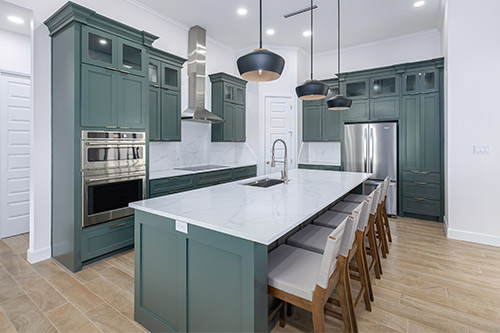
A modern kitchen featuring green cabinets and a sleek white countertop, showcasing current design trends.

The best kitchens aren’t just designed. They’re lived in, loved in, and remembered.

Once a functional space, the kitchen has blossomed into the vibrant heart of the modern home. A place where recipes turn into rituals and guests gather as effortlessly as family. It’s more than just a room for food preparation. It’s a hub for connection, creativity, and comfort.

Whether you’re an aspiring chef or a weekend pancake warrior, investing in thoughtful kitchen design is a daily gift to yourself. The right blend of functionality and style transforms ordinary cooking spaces into extraordinary living environments where conversations and sustenance create memorable moments..

Embracing Design Trends That Speak to You

Today’s kitchen trends go beyond aesthetics. It is constantly evolving, with today’s trends emphasizing both functionality and personality. They reflect values, sustainability, adaptability, and expression. Rather than chasing what’s “hot,” homeowners now choose what resonates.

Top 5 Kitchen Trends of 2025

Top designers are shaping 2025 kitchens with bold, functional choices that prioritize both style and everyday usability. Each trend brings unique advantages but must be balanced with lifestyle needs. The table below summarizes their most recommended trends, along with the pros and cons of each, to help you make informed design decisions.

Trend Pros Cons
Unfitted/Freestanding Kitchens Custom look, adaptable layout May reduce built-in storage
Statement Stonework Visually striking, elevates luxury High cost, may date quickly
Smart Appliances Energy efficient, user-friendly features Expensive upfront, tech may age out
Bold Color Palettes Adds personality, makes a statement May need repainting as tastes evolve
Mixed Materials Rich texture, dynamic finishes Requires careful balance to avoid visual clutter

These designs, bold, elegant, and smart, are evident in Guzman Construction’s kitchen designs. By incorporating energy-efficient smart appliances and bold surface materials, Guzman kitchens beautifully blend longevity with livability.

Trend Meets Taste: Finding Your Personal Kitchen Identity

Before diving into design boards or Pinterest marathons, take a moment to reflect:

  • How do you use your kitchen? Cooking daily, family breakfasts, entertaining guests?
  • What mood do you want to evoke? Warm and rustic? Sleek and modern? Lively and colorful?

Tips for Trend-Savvy Kitchen Design

Start with these tips to make confident, lasting choices for your kitchen design. One that supports your daily routines, reflects your style, and stands the test of time in both form and function.

  • Think long-term: Trends are exciting, but timeless elements (wood, stone, neutral tones) keep your kitchen relevant for years.
  • Choose one statement piece: A bold countertop, striking backsplash, or vivid cabinets make a lasting impression without overwhelming the space.
  • Coordinate with your home’s architecture: A farmhouse kitchen in a sleek modern condo can feel jarring.
  • Incorporate trends affordably: Use art, bar stools, lighting, or hardware to stay current without costly remodels.

At Guzman Construction, kitchens are crafted to suit each homeowner’s budget, timeline, and preferences. A practical roadmap toward your perfect space.

How to Design a Kitchen: Practical Steps and Ideas
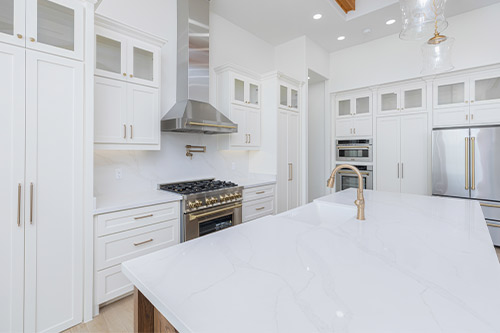
A modern kitchen featuring white cabinets and a sleek stainless steel oven, showcasing current design trends. Guzman Construction

Designing a kitchen requires thoughtful planning to create a space that works efficiently for your lifestyle while reflecting your personal style. Whether starting from scratch or remodeling, the process demands careful consideration as getting the design right the first time is essential. Let’s break down this process into manageable steps that will help you create your ideal kitchen.

Practical Steps to Start Your Kitchen Design

Each step ensures your kitchen reflects both utility and taste:

  1. Assess Needs & Lifestyle
    Determine how you cook, who uses the space, and how often guests gather. This will guide your layout.
  2. Plan Layout Around Workflow
    Use the work triangle method: the stove, sink, and refrigerator should form a natural, efficient path.
  3. Select Durable, Beautiful Materials
    Guzman Construction’s use of premium materials guarantees every surface stands the test of time and trend.
  4. Create Smart Storage
    Mix built-in and freestanding options. Pull-out pantries, deep drawers, and hidden spice racks help avoid clutter.
  5. Layer the Lighting
    Combine ambient ceiling lights with task lighting (under cabinets, over islands) and warm accent lights for mood and function.
  6. Choose Efficient Appliances
    Opt for Energy Star-rated appliances. Guzman’s inclusion of Built-to-Save features is a long-term win for utility bills.

Layout Options to Match Every Home

Your kitchen shape is just as important as your color palette. Choosing the right layout maximizes your space and supports how you move.

Popular Kitchen Layouts Table

Layout Type Best For Features & Flow
Single Wall Small homes or apartments Compact and efficient, all elements on one wall
Galley Narrow spaces Parallel counters maximize prep and storage space
L-Shaped Open-plan homes Corner design allows for open flow into dining or living
U-Shaped Large families, serious cooks Three walls of cabinets offer ample space and surfaces
Island Entertaining & social cooking Central island adds prep, storage, seating, and connection
Peninsula Open kitchens with limited room Adds counter space without the bulk of a full island

In the Guzman Portfolio, the use of U-shaped kitchens with islands demonstrates the power of combining form and function, especially when built around family cooking and hosting.

Personality, Color, and Creative Freedom
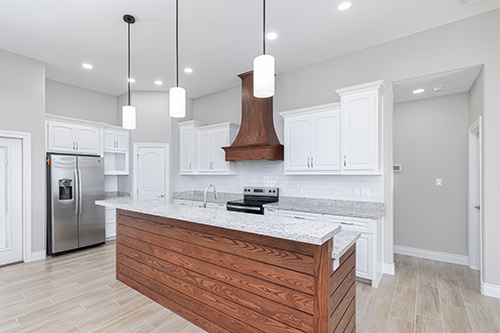
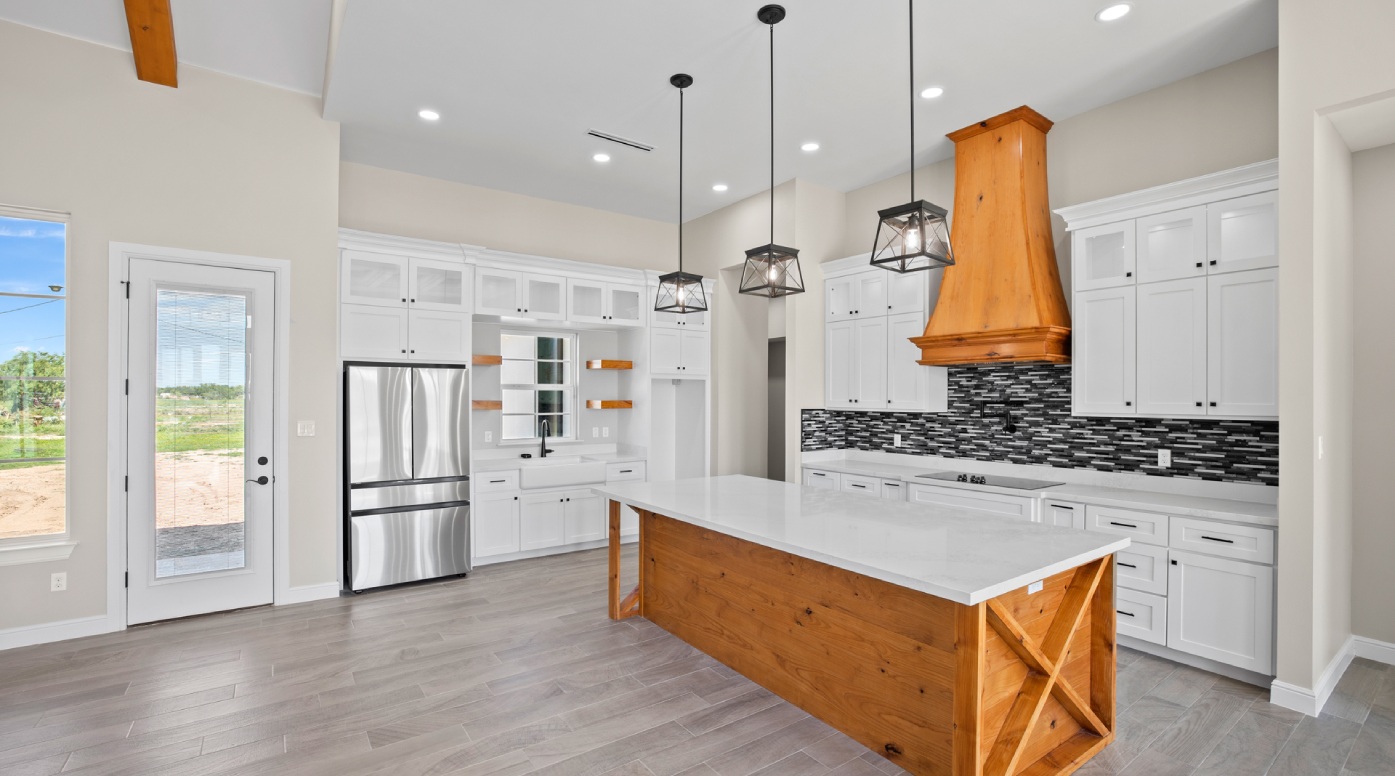
 A modern kitchen featuring white cabinets and a wooden island, showcasing popular design trends.

Now comes the fun part! Bringing your story into your space.

How to Add Your Personal Touch

Make your kitchen yours with these easy design infusions:

  • Add Color Wisely: Use deep greens, navy, or ochre on cabinetry to create warmth. Keep counters and walls neutral to avoid overwhelm.
  • Mix Materials: Pair wood with metal, or matte finishes with glossy ones for depth.
  • Choose Character-Driven Furniture: In the unfitted kitchen style, vintage hutches, butcher blocks, and open shelving tell a story.
  • Use Unique Hardware: Swapping cabinet handles with brass, ceramic, or even leather pulls can shift the entire feel.
  • Invest in Statement Lighting: Pendant lights above the island or sconces near open shelving add glow and flair.

The Guzman Difference: Bringing It All Together

When it comes to execution, working with an experienced builder makes all the difference. Guzman Construction doesn’t just build kitchens. They build dream spacesTheir portfolio showcases:

  • Premium materials and artisan finishes
  • Tailored layouts to match your lifestyle
  • Sustainable choices with long-term ROI
  • Creative use of design trends that stay functional

Each kitchen is a collaborative journey. From concept drawings to the last drawer pull, the team ensures your vision is honored while offering expert guidance on what works best.

Guzman Construction offers:

Feature Benefit
In-house financing Keep your project on budget with flexible terms
Local expertise Understanding of regional trends and climate needs
Timeline-focused construction Delivered when promised, no surprises
Built-to-Save certified Reduce energy costs without sacrificing performance
Proven portfolio Browse real examples that reflect a wide range of styles

Your Kitchen, Your Story

Your kitchen should feel like you. Whether you gravitate toward minimalism, tradition, or eclectic expression, the most important ingredient is intention. Guzman Construction brings a blend of artistry, craftsmanship, and technical skill to every project. With them, you can expect a process that’s collaborative, transparent, and inspiring, resulting in a space that not only meets your needs but exceeds your dreams. Contact Guzman Construction today to help you turn your vision into a kitchen that becomes the heart of your home.
The Real Cost of Building a Home in McAllen: A 2025 Guide

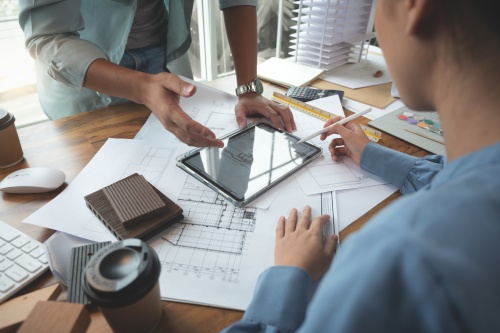
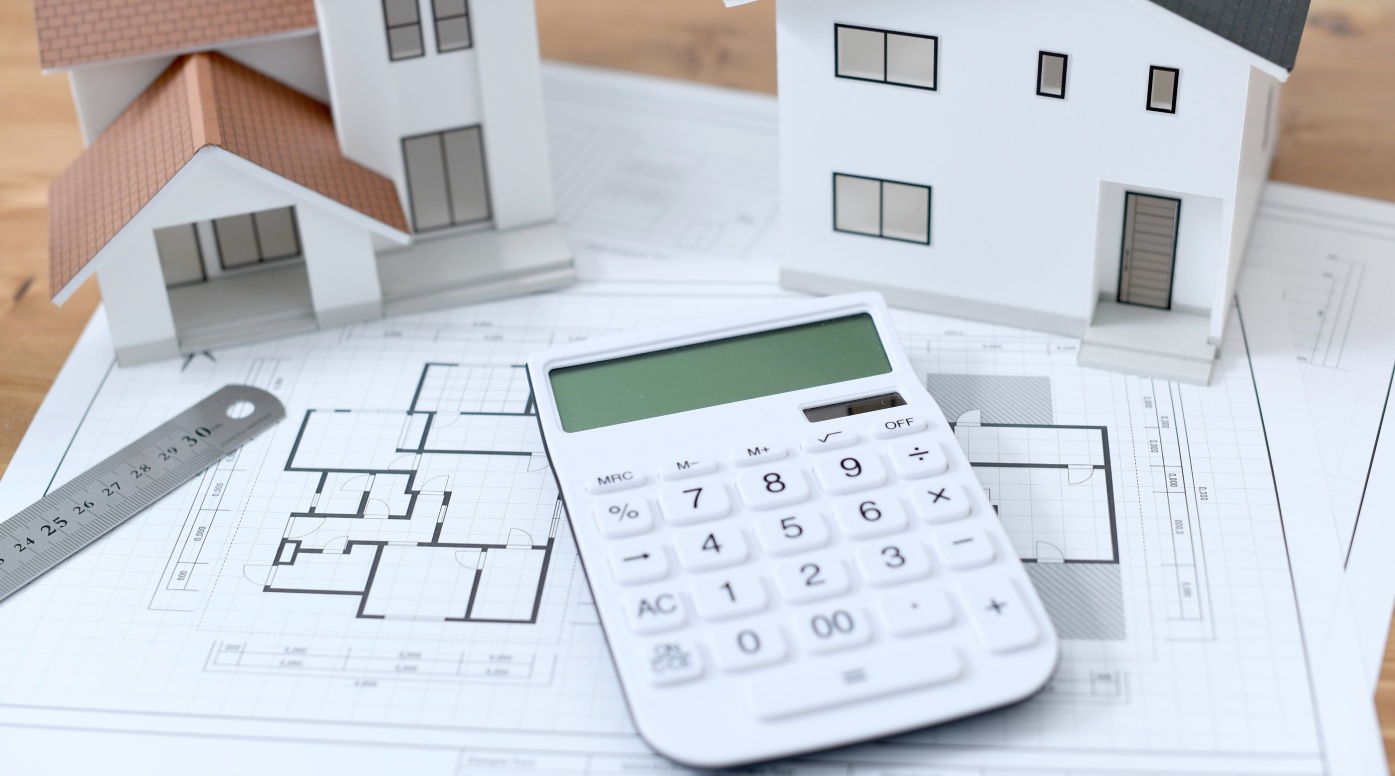
Architectural model of a house, house drawings, and calculator

If you’re dreaming of building a home in McAllen, Texas, congratulations! You’re embarking on an exciting journey. Known for its affordability and charm, McAllen offers a unique opportunity to create a dream home that’s truly yours.

But how much does it really cost to build a home in McAllen in 2025? Let’s break it down, step by step, so you can budget effectively and avoid surprises along the way.

Understanding the Cost of Building a Home in McAllen

McAllen’s affordability has long been a draw for homebuyers. In fact, it earned the title of the cheapest city to live in America. Today, the city remains an attractive choice for building homes, with costs ranging from $110 to $210 per square foot, depending on the grade of construction. Compared to the national average of $207 per square foot, McAllen provides significant savings, making it ideal for families and individuals alike.

Here’s how those costs break down:

  • Standard grade construction: $110 to $140 per square foot
  • Premium grade construction: $140 to $170 per square foot
  • Luxury grade construction: $170 to $210 per square foot

This variation depends on factors such as land, materials, labor, and additional fees. Let’s dive deeper into each component.

Factors Influencing Home Construction Costs

When building a home in McAllen, several key factors significantly impact the overall construction costs. Understanding these elements is crucial for accurately budgeting and planning your project:

  • Labor and material costs

These are primary drivers of construction expenses and have been notably affected by recent economic trends. According to the Texas Real Estate Research Center, the Producer Price Index (PPI) for construction services and goods has increased significantly, particularly since the COVID-19 pandemic.

This upward pressure directly translates to higher building costs, with construction typically accounting for about 60% of a new home’s sale price.

  • Land acquisition and site preparation

Expenses for land can vary widely based on factors such as location, site accessibility, slope, soil condition, and drainage requirements. Prime locations or lots with challenging terrains often require additional investment in site preparation, which can increase overall costs.

  • Design and architectural fees

These fees typically range from 8.5% to 8.92% of the total construction value in McAllen, influenced by project complexity and the architect’s experience. While it may be tempting to cut corners here, detailed planning often results in long-term savings and a better-aligned final product.

Architects and interior designers women discussing to concept of building design. Estimation for construction project with tablet technology, Drawing, Material and Model. Selective focus center imageHow to Estimate the Cost of Building a Home?
While the exact costs of building a home are dependent on various variables, here is a breakdown of all the costs you will incur:

1. Land Acquisition

The cost of land can vary significantly based on location. In Texas, the average price per acre is $4,737, but in McAllen, factors like proximity to amenities, neighborhood desirability, and accessibility can shift prices.

For example, plots in high-demand areas like Fairway Grande may cost more due to their prime location, while properties in developing areas like Via Cantera might be more affordable. Additionally, challenging terrains near the Rio Grande may require extra preparation, such as flood mitigation or soil stabilization, increasing costs further.

2. Materials and Labor

Materials and labor, also called hard costs, typically account for about 60% of a home’s cost. Recent supply chain disruptions and inflation have pushed prices higher, making this a significant budget item. Below are estimated costs of material and labor costs for a 2,000-square-foot home:

  • Framing: $14,000 to $32,000
  • HVAC installation: $5,000 to $12,500
  • Roofing: $5,866 to $47,000, depending on materials
  • Plumbing: $371 to $2,133
  • Electrical work: $130 to $6,217

The cost of building a tiny home will correspondingly decrease. Also, the quality of materials chosen—standard, premium, or luxury—can significantly influence these expenses. Premium and luxury options often result in higher initial costs but may offer better durability and aesthetic appeal.

3. Soft Costs

Soft costs are the “behind-the-scenes” expenses, including:

  • Permits: Typically 16 cents per square foot, with a minimum fee of $48 (plus a $700 park fee for new residences).
  • Architectural fees: These range from 8.5% to 8.92% of the total construction value, depending on the complexity of the project and the architect’s expertise.
  • Land surveys and inspections: Surveys average around $2,300, while inspections during construction (e.g., plumbing, framing, and insulation) add further costs.
  • Financing: This includes loan origination fees, interest, and closing costs, all of which can add thousands to your budget.

4. Custom vs. Pre-Designed Homes

Custom homes offer unparalleled personalization, allowing homeowners to tailor every detail to their preferences. However, this flexibility comes with higher costs due to unique architectural designs and longer timelines.

On the other hand, pre-designed homes—offered by many local builders—are more budget-friendly and can often be modified to suit individual needs. Choosing a pre-designed model may save on architectural fees and reduce construction time, making it a practical option for those on a tighter budget.

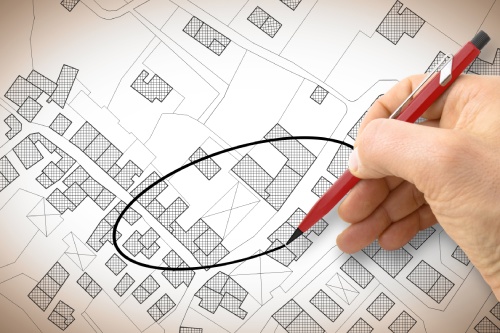
Hand drawing and select an area above an imaginary cadastral map of territory with buildings, fields, roads and land parcel - concept imageCost Management Strategies

Building a home doesn’t have to break the bank. Here are some tips to manage costs effectively:

  • Budget meticulously: Include both hard and soft costs and allocate a contingency fund of 10-20% to cover unexpected expenses such as delays or material price fluctuations.
  • Work with local builders: An experienced builder familiar with McAllen’s market, like Guzman Construction, can help secure better deals on materials and labor.
  • Choose mid-range materials: Opt for a balance between quality and affordability to meet your budget without compromising on longevity or aesthetics.
  • Plan for energy efficiency: Incorporate features like energy-efficient windows, smart thermostats, and solar panels. While these add to upfront costs, they can lead to significant savings over time through lower utility bills.

Cost Comparison of Home Construction Grades

To help you visualize the cost ranges, here’s a simple chart:

Construction Grade Cost per Square Foot
Standard Grade $110 – $140
Premium Grade $140 – $170
Luxury Grade $170 – $210

Close-up of person stamping documents to approve agreements,Navigating Permits and Regulations

McAllen requires all new constructions to comply with strict building codes and safety standards. Here’s what you need to know:

  • Application process: Submit a Building Permit Application along with floor plans, site plans, and energy compliance reports to the local Building Permits and Inspections office.
  • Permit costs: Fees are based on square footage, starting at 16 cents per square foot, with a minimum of $48. For new residences, a $700 park fee is also applicable.
  • Inspections: Schedule multiple inspections throughout the construction process, including rough plumbing, framing, insulation, and a final inspection to ensure compliance.

Working closely with contractors and local authorities can help streamline this process and avoid costly delays.

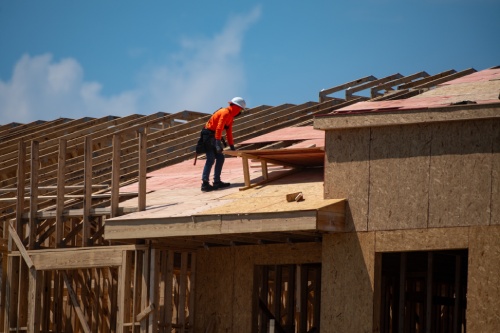
Roofing construction. Roofer roofing on roof structure. Roofing Wooden House Frame. Worker roofer builder working on roof at construction site. Construction builders Roofing.Additional Considerations

Timeline and Delays

Construction timelines can vary based on factors such as weather, material availability, and labor shortages. In McAllen, building a custom home typically takes 8-14 months, while pre-designed models may be completed within 2-3 months after contract signing. Delays can lead to increased labor costs and extended loan interest payments, so staying proactive and organized is key.

Financing Options

Explore financing options like construction loans, traditional mortgages, or government programs. Consulting with a financial advisor who understands McAllen’s market can help you secure favorable terms.

Location-Specific Costs

Properties near flood zones or historical areas may have additional requirements, such as flood insurance or adherence to preservation guidelines. These can add to both initial and ongoing expenses, so factor them into your budget.

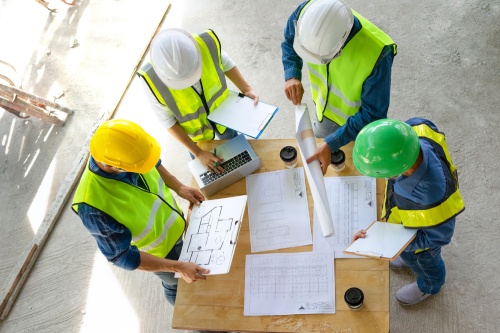
engineering teamwork meeting on site work,engineers project manager consultation meeting with coworker.concept of engineering or architecture working outdoors for a new real estate home projectBuild Your Dream Home with Guzman Construction


Building a home in McAllen is an exciting opportunity to blend affordability with personalization. By understanding the real costs involved and planning wisely, you can make your dream a reality without unnecessary stress. Whether you’re opting for a luxury custom build or a cozy pre-designed model, McAllen’s affordability and charm make it the perfect place to lay down roots.

To ensure success, consult with an experienced local builder like Guzman Construction, who understands the city’s unique dynamics. Remember, while cost is a significant factor, investing in quality materials, energy-efficient features, and professional guidance can enhance your home’s long-term value.

Ready to take the first step? Contact us today to learn more. 

Securing Your Home: Modern Safety Features and Technologies

Young couple man and woman husband and wife or caucasian boyfriend and girlfriend setting up home surveillance security camera cctv protecting their home apartment bright room real people copy space: home safety.

Home security has undergone significant transformations over the past century. From simple door locks and night security guards to modern smart security systems, the evolution has been remarkable.

Initially, post-WWI innovations included door shakers and central monitoring services, advancing to video surveillance systems in the 1970s and hardwired security systems in the 1980s. The early 2000s saw the rise of cellular monitoring and DIY installations, leading to today’s cutting-edge smart technology with remote access and electronic locks.

Modern technologies have become indispensable in ensuring the safety and security of our homes. Integrating these advanced systems simplifies and enhances protection measures, making it easier to monitor and control home security remotely.

If you plan to make your home more secure using modern-day safety features, this article is for you. Here, we will have a look at modern features and technologies that can enhance your home safety.

Benefits of Modern Home Safety Systems

Modern home security systems offer numerous advantages, enhancing both convenience and home safety. One of the most significant benefits is the increased convenience and time savings.

According to statistics, 57% of Americans report saving an average of 30 minutes daily and nearly $100 monthly due to smart home technologies. This efficiency stems from automation features, such as smart locks that eliminate the need for keys by allowing you to lock and unlock doors remotely via Wi-Fi or Bluetooth.

Furthermore, smart security systems enable remote monitoring and control through smartphones, giving you the ability to oversee and manage your home’s security from anywhere. This feature not only enhances home safety but also provides enhanced peace of mind, especially for older adults and those frequently away from home.

With immediate alerts and real-time updates, you can respond quickly to potential threats, thereby ensuring the safety of your property and loved ones.

Modern Home Safety Features and Technology

1.    Smart home integration

Smartphone with launched application for alarm security system, lock or unlock entrance door on interior background. Focus on mobile. Smart and safe home concept.

Smart home integration revolutionized home security by creating unified systems where security devices seamlessly work with other smart home gadgets. This interconnectedness allows you to manage and automate your home’s security setup through centralized control, typically via a smartphone or tablet. Such integration not only enhances convenience but also significantly boosts overall security.

Unified systems offer a range of benefits, including the ability to monitor security cameras, adjust smart locks, and control alarm systems from a single app. By centralizing control, you can streamline your security measures, ensuring prompt responses to potential threats and maintaining a secure environment effortlessly.

2.    AI for smarter security

If you are building your own home in RGV, deploying AI for smarter security is a good idea. The integration of artificial intelligence (AI) in home security systems can help reduce false alarms. AI’s powerful data analysis capabilities enable security systems to distinguish between genuine threats and harmless situations, such as pets moving or leaves blowing in the wind. By learning and adapting to the household’s usual activities, AI can predict and identify abnormalities more accurately.

This technology minimizes the frequency of false alarms, which not only reduces unnecessary stress but also enhances the efficiency of emergency response teams. AI-driven security systems offer greater reliability, ensuring alerts are significant and timely.

3.    Biometric authentication

Biometric authentication has revolutionized home security by introducing fingerprint scanners and facial recognition systems for secure and convenient access. Unlike traditional security methods that rely on keys or codes, biometric systems use unique physical characteristics. This makes them more robust against unauthorized access.

With fingerprint scanners, homeowners can unlock doors with a simple touch, while facial recognition systems provide hands-free entry through advanced image analysis.

The main advantage of biometric authentication is the unparalleled security it offers. Traditional methods can be compromised through lost keys or guessed codes, but biometric data is nearly impossible to replicate.

Biometric systems also enhance convenience. They eliminate the need to carry keys or remember passwords. Smart locks utilizing biometric technologies are becoming increasingly popular, offering seamless integration with other smart home devices for a comprehensive security solution.

4.    Remote monitoring

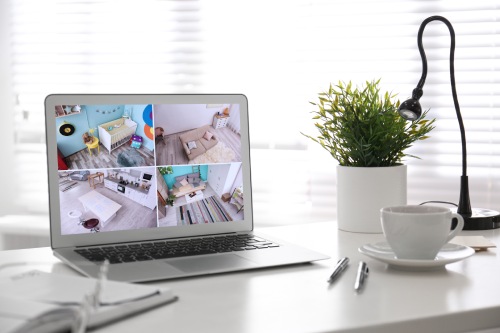
Laptop with view from CCTV cameras. Home security system.

By leveraging smartphones or tablets, homeowners can keep an eye on their properties from virtually anywhere in the world. This convenience allows for real-time updates and immediate control over various aspects of the security system, ensuring peace of mind even when you’re miles away from home.

One of the key benefits of remote access is the ability to receive instant notifications about any unusual activity. Whether it’s an unauthorized entry, a triggered smoke alarm, or a water leak, the system alerts you right away, allowing for timely intervention. Moreover, remote access is not just about surveillance; it also includes the ability to lock or unlock doors, turn on or off lights, and even manage smart thermostats, thereby enhancing overall home automation.

5.    Privacy protection

Modern home security systems emphasize transparent data practices and robust security measures to ensure that your personal information remains secure. These systems are designed with encryption and stringent security protocols to safeguard data from potential breaches and unauthorized access.

This dual focus on security and transparency ensures that while your new home in McAllen becomes smarter and more secure, your personal data remains protected.

6.    Emergency notification systems

Emergency notification systems are increasingly becoming an essential feature in modern homes for improved home safety. These systems use advanced wireless sensors to provide real-time monitoring capabilities to detect and alert homeowners of various threats, such as fires, floods, or intrusions. The integration of these sensors enables instantaneous communication, ensuring that any potential hazards are quickly identified and addressed.

These systems often come with comprehensive packages that include fire detectors, flood sensors, and security alarms to safeguard against a range of emergencies. By using real-time data collection and analysis, they can provide timely alerts through mobile devices, allowing you to take immediate action even when you are not at home. This immediate response is crucial for minimizing damage and ensuring home safety.

7.    DIY security

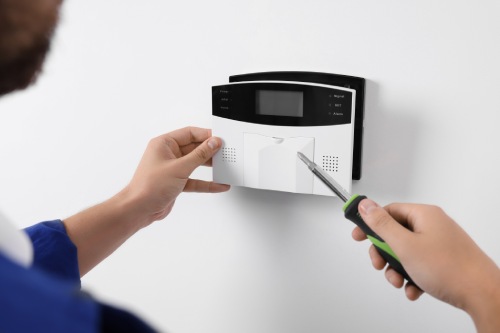
Man installing home security alarm system on white wall indoors, closeup

In recent years, DIY security systems have gained popularity due to their ease of installation and cost-effectiveness. These systems are designed to be user-friendly, allowing homeowners to set up and monitor their own security without needing professional help. This not only reduces the cost associated with traditional installation but also provides flexibility in customizing the security features to fit individual needs.

DIY security solutions include a wide range of devices, such as smart cameras, motion sensors, and smart locks. They often come with mobile apps that enable real-time monitoring and control from anywhere via a smartphone or tablet. Many systems are scalable, allowing homeowners to add as many devices as needed, ensuring a tailored fit for any home.

Keep Your Home Safe!

In summary, the landscape of home security is rapidly evolving, driven by cutting-edge technologies. Key trends include smart home integration, AI-enhanced systems, biometric authentication, remote monitoring, and data privacy features. DIY security solutions offer affordable and customizable options for homeowners seeking modern security measures.

Ready to take your home safety to the next level? Discover how Guzman Construction can integrate the latest modern safety features into your new or existing home. Contact custom home builders in RGV today to learn more about our comprehensive building solutions and exceptional customer service.

The Role of Interior Design in Custom Home Building

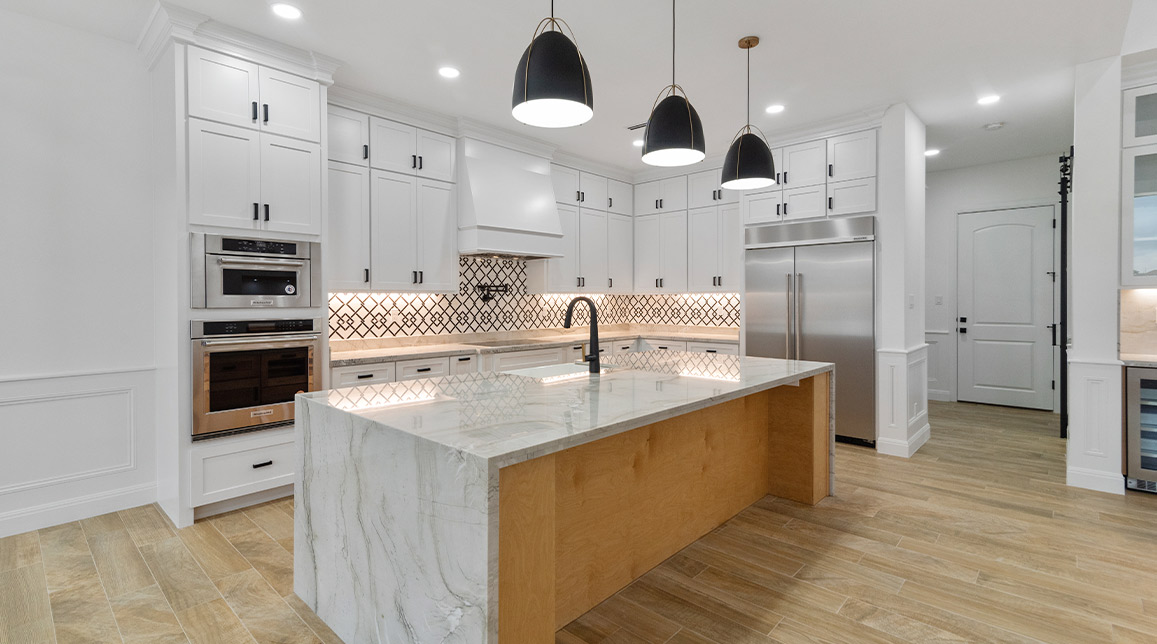
a large kitchen with a center island in the middle of the room

Thinking of building a custom home that suits your lifestyle? Skeptics will say it’s expensive and a waste of time. But those who’ve built one successfully will claim otherwise. A majority of the homeowners will also profess to the importance of interior designers in building the home of their dreams.

You see, dreaming of a concept is one thing. And putting it to paper and turning the concept into reality is another. That’s where the art and science of interior design come into play. But its importance goes beyond that. In this article, let’s learn about the role of interior design in custom home building.

What is Interior Design (and what it isn’t)?

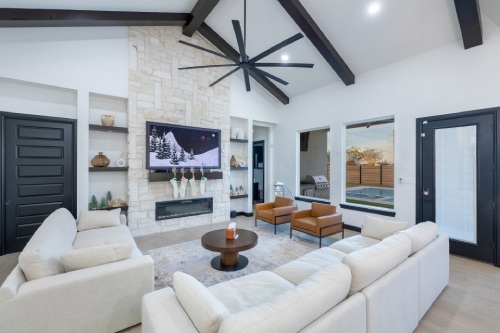
Interior living room luxury design for custom home.

Britannica reports that the term interior design indicates a broad area of activity. Some are even associated with domains like architecture and construction. But these are all separate domains. Thus, as you understand the role of it in custom home building, you should know what it is and isn’t.

The International Interior Design Association, or IIDA, defines interior design as “the professional and comprehensive practice of creating an interior environment that addresses, protects, and responds to human need(s).

Expanding further on the definition, IIDA says that interior design has three aspects: art, science, and business planning. These mandate for well-being, safety, and health of the occupants while giving the space its distinct style and aesthetic.

So, interior design is about creating the inner space of the house and ensuring livability and aesthetics. In contrast, architecture is about designing the entire structure from the ground up.

An interior designer might help you choose a comfy sofa layout for your living room, pick the perfect paint color to make your kitchen feel bright, or suggest lighting options to create a relaxing atmosphere in your bedroom. In contrast, an architect is more concerned about the layout, placement of the doors and windows and building materials to be used.

How Interior Design Helps Build Custom Homes

Indoor shot of young female interior designer works on apartment design project draws in digital tablet with stylus thinks about decorations of apartment wears casual jumper poses at desktop.

When you’re building a new home in McAllen, you’re essentially giving the house a distinctive touch. The house stands out from the rest and is fine-tuned to the needs of the occupants.

While that may sound simple, pulling it off is difficult. Here are the ways interior designers help with building custom homes:

Early-stage planning and expert inputs

Failing to plan is planning to fail. Many custom home projects fail to produce the desired results because of a lack of proper planning. And once the construction is done, it’s often impossible or expensive to redo it. With interior design, you can lay the groundwork for your custom home.

Interior designers are skilled professionals who understand humans, emotions, and the spaces where we live. They are trained to grasp what the client wants and the best possible design principles that can be applied to get the best results.

The designers often have in-depth conversations with you to understand your lifestyle, hobbies, and how you envision using each space. For example, do you love hosting large gatherings or need a dedicated home office space? They might even create user profiles for different family members to understand individual needs. This helps design spaces that cater to everyone’s comfort and functionality.

When you bring in interior designers, you get expert inputs that you may have missed otherwise.

Visualization with 3D software

Building a custom home is exciting, but it can also be daunting to imagine the final product based on blueprints. That’s where interior designers come in with their superpower: 3D design software! These are specialized software that create a digital version of the design. The magic of 3D software lies in its ability to render realistic textures and finishes.

The designer will use your finalized plans to create a digital 3D model of your entire home. This model includes walls, floors, ceilings, windows, and doors, essentially a virtual replica of the structure. Once the basic structure is built, the designer can populate the space with virtual furniture, rugs, lighting fixtures, and other decorative elements.

Some designers might even offer a VR experience. Here, you wear a VR headset and can truly feel like you’re standing inside your home, further enhancing the visualization process.

By using 3D software, interior designers bridge the gap between imagination and reality. They empower you to actively participate in the design process and visualize your dream home before the first brick is laid.

Budgeting and finance

Building a custom home can often go out of budget. There are many factors that must be controlled to finish a project within a set budget. Interior design principles can help in that regard.

The first step to budgeting is prioritizing stuff. An interior designer will work with you to understand your priorities for different aspects of the home. Do you dream of a luxurious kitchen or a spacious master bathroom? By identifying these priorities, they can allocate your budget strategically.

They can analyze your plans and suggest alternative materials, finishes, or layouts that achieve a similar look and feel for a lower cost. For example, proposing high-quality laminate countertops instead of solid stone for a beautiful yet budget-friendly kitchen.

In some cases, interior designers can also help you get better deals. They often have established relationships with vendors and suppliers, which allows them to leverage trade discounts and negotiate better pricing on furniture, fixtures, and finishes.

Bringing vision to life

The role of interior design doesn’t stop at blueprints and 3D. They’re much more involved in the building process, ensuring that you get what you want.

Even with the best plans, unforeseen circumstances can arise during construction. The designer can help you navigate these situations and find solutions that stay true to your original vision. For example, if a particular light fixture is unavailable, they can suggest a suitable alternative that maintains the desired aesthetic.

While they won’t be swinging hammers themselves, interior designers can work closely with contractors and other tradespeople. They’ll communicate the design plan, ensuring everyone is on the same page about material specifications, placement of fixtures, and overall layout.

They can schedule regular site visits to monitor the progress and ensure the construction adheres to the design plan. They’ll check for any discrepancies and address them promptly to avoid costly rework later.

Peace of mind

Building a custom home is a stressful endeavor. The end result may not go in your favor, the fear of which is enough to induce nightmares. But that’s why interior designers exist. That’s their “psychological” role: go guide homeowners through.

Interior designers act as your trusted partners throughout the custom home-building process. Their knowledge, communication skills and project management expertise bring peace of mind by ensuring a smooth, stress-free journey toward realizing your dream home vision.

So, when you’re building a custom home, it makes sense to have interior design professionals by the side.

Conclusion

Building a custom home in RGV is an opportunity to create a space that perfectly reflects your style and needs. From initial space planning to final touches, the expertise of a custom home builder in RGV can transform your dream into a beautiful and functional reality. So, don’t hesitate to leverage the power of interior design – it’s an investment that will pay off in comfort, functionality, and peace of mind. Contact us today to learn more.